


Umbrella Stands vs. Wall Hooks: A Comparison for Home and Office
You come in from a downpour, umbrella dripping, hands full, and the question arrives immediately: where does this thing go? For most homes and offices the answer is one of two things — a stand on the floor or hooks on the wall. Both work. They simply work differently, and the better choice depends on your entryway, how many umbrellas pass through it, and how much you mind a small puddle near the door.
The Two Options in Plain Terms
An umbrella stand is a freestanding container, usually a tall cylinder or a rectangular bin, often with a removable drip tray at the base. Some have dividers or slots so each umbrella stands upright; others are open and let you drop in whatever comes through the door. They can hold long golf umbrellas, walking sticks and rolled posters alongside the everyday folding umbrella.
Wall hooks are simpler: a bracket or rail mounted at a comfortable height, with one or more hooks spaced along it. A crook-handled umbrella hangs neatly; a folding umbrella with a wrist strap can hang from a small hook or a loop. Nothing touches the floor, which is the whole appeal.
Floor Space and Footprint
Measure before you shop. A typical stand takes up roughly the footprint of a dinner plate or a small wastebasket — call it eight to twelve inches across — plus enough clearance to lift an umbrella in and out. In a narrow hallway, that patch of floor is often already spoken for by shoes, a recycling bin or the swing of a coat closet door. If your door opens inward and the handle sweeps across the corner where a stand would sit, the stand loses.
Wall hooks reclaim that floor entirely. What they need instead is vertical real estate and a solid fixing point. Hooks want to sit somewhere between waist and shoulder height so hanging and grabbing feel natural, and they should be clear of the door swing, light switches and the path people walk. In a rental, remember that a hook leaves a hole; a stand leaves a ring on the floor if it sits on a damp tray.
Capacity, Wetness and Drying
Capacity is where the two diverge most. A stand might hold four to eight umbrellas depending on its width, and it contains the water they carry. A hook rail with four hooks holds four umbrellas — and drips each one straight down the wall and onto the floor beneath it, unless you plan for that.
There is also the drying question. Umbrellas last longer and smell better when they are opened out to dry rather than left folded and damp. A stand can hold an open umbrella if it is wide enough, or you can stand the wet one in the tray and let it drain. Hooks are useless for an open umbrella; you would be hanging a wet canopy against a wall.
If your household is one umbrella at a time, hooks are plenty. If two adults, a teenager and a guest all arrive soaked on the same evening, a stand earns its floor space.
Style, Materials and First Impressions
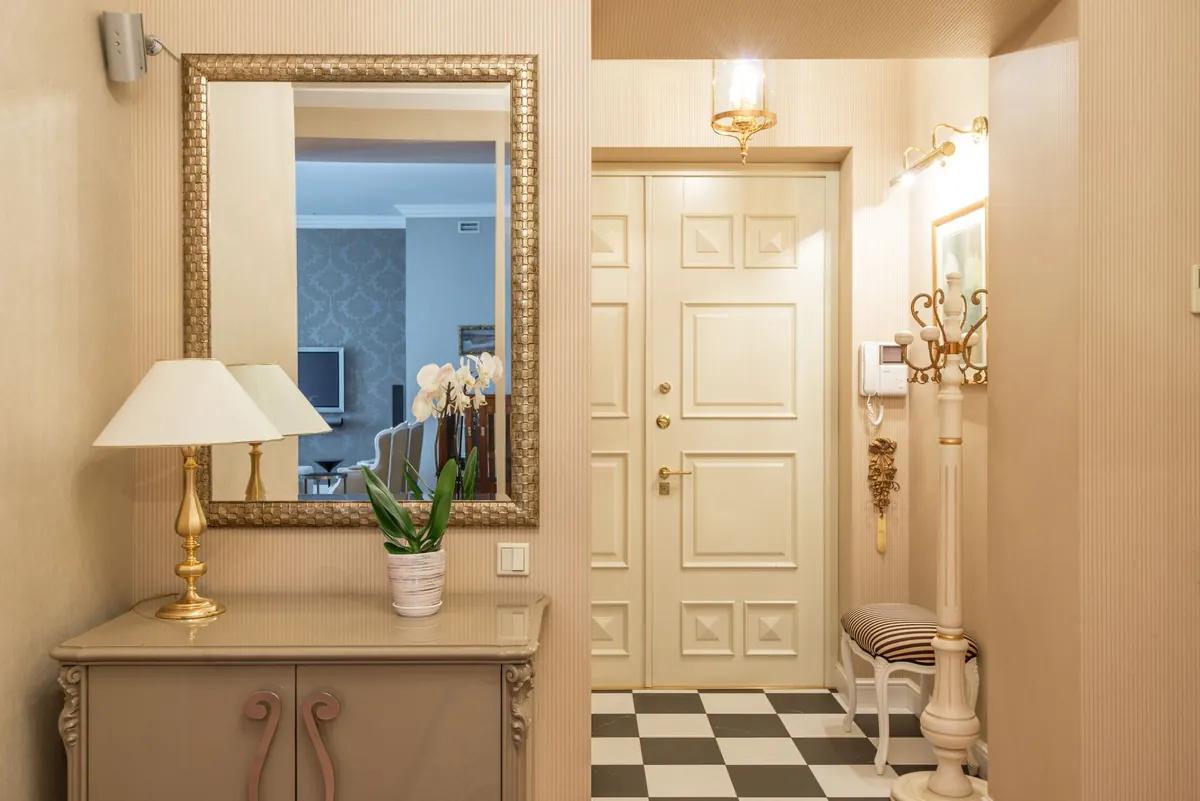
An entryway is the one room every visitor sees, so this matters more than it sounds. A stand reads as furniture. Ceramic and cast iron look traditional and heavy; slim metal tubes and matte finishes look modern; a wooden or woven design warms up a hallway with natural tones. Because it is a solid object, it can anchor an empty corner or echo the shape of a console table.
Hooks read as architecture — quieter, more minimal, almost invisible when empty. A brass rail against dark paint, or a simple wooden peg rail above a bench, can look deliberate and tidy. The trade-off is that a hook rail with three wet umbrellas on it looks busier than a stand does, because the umbrellas hang at eye level in a row rather than clustering in one container.
Practical Details Before You Buy or Drill
A few checks save returns and wall repairs:
- Measure the longest umbrella. Golf umbrellas and long stick umbrellas need a deep stand or a high hook. A short stand will tip them out.
- Check the base. A tall, narrow stand with a light base tips easily. Weighted or wide-based designs stay put when someone grabs an umbrella one-handed.
- Look for a removable tray. You want to empty it without lifting the whole stand. Some stands have a separate drip tray; some have a sealed base you tip out.
- Find the fixing point for hooks. Hooks carry more load than people expect once coats and bags join the umbrellas. Use proper wall anchors for plasterboard, and check for hidden cables and pipes before drilling.
- Think about trim. Skirting boards and door frames can stop a hook rail sitting flat, and a stand pushed against a baseboard may rock.
Installing a hook rail well is a short job if you take it in order: decide the height and spacing, hold the rail level against the wall and mark the holes with a pencil, check for studs or use suitable anchors, drill, then fix and test with a weighted tug before trusting it with anything. For a stand, the only installation step is choosing a spot the door will never hit.
Home Versus Office
At home, the priorities are usually tidiness, capacity and looks. Families tend to do better with a stand near the door, because children and guests will actually use a container they can drop something into, and the water stays in one place. Hooks suit a household that keeps one or two umbrellas and wants the floor clear for prams, boots or a dog bed.
In an office, the calculation shifts. Shared entryways need capacity and low maintenance more than charm: a sturdy stand by the main door catches visitor umbrellas, while a hook rail near individual desks or a coat area keeps personal umbrellas off the floor and out of the way of cleaning staff. If your reception area has a coat rail, adding two or three hooks beneath it costs little and stops umbrellas leaning against the wall.
Making the Decision
Choose a stand if you have floor space to spare, more than two regular umbrellas, long umbrellas to accommodate, or anyone in the house who prefers dropping things into a container rather than hanging them up. Choose hooks if your entryway is tight, your umbrella count is low, you rent and want the smallest possible change, or you would rather keep the floor completely clear.
You can also do both, and many well-organised hallways do: a hook by the door for the umbrella you grab every morning, and a stand in the corner for guests, spares and anything still drying. Neither option is the wrong answer — the mistake is buying one without measuring the door swing, the longest umbrella or the wall you plan to drill into.
Photo: Max Vakhtbovych / Pexels