

A Parent's Checklist for Choosing a Kids' Umbrella: Safety, Size, and Fun
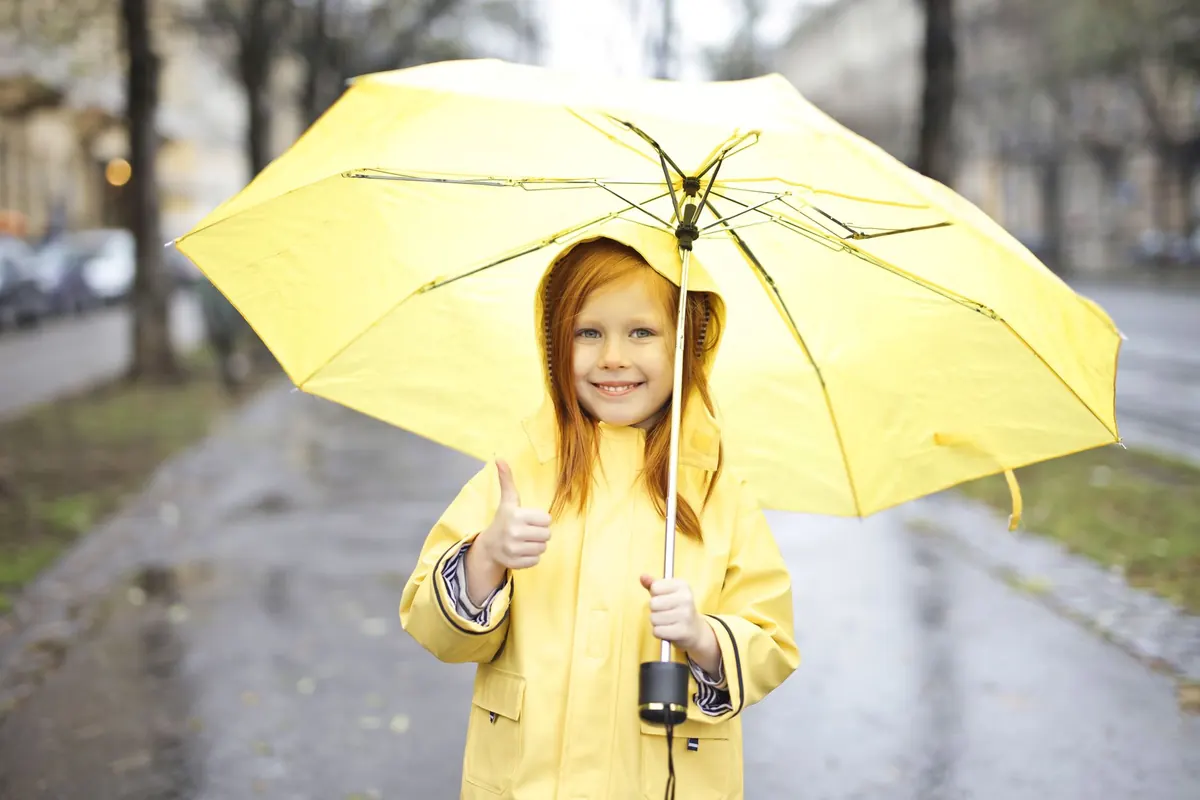
A child's umbrella has a hard job. It has to survive being dragged along a fence, dropped in a puddle, and jammed into a backpack next to a leaky water bottle. It also has to be light enough for a six-year-old to hold upright against the wind on the walk to school. Most umbrellas sold in the kids' aisle manage maybe one of those things well. The good ones manage all three, and you can spot them in about ninety seconds once you know what to look for.
Here's the checklist we'd run through before buying, in roughly the order that matters.
1. Check the Tips Before Anything Else
Run your thumb along the edge of the canopy. Every rib should end in a rounded plastic or rubber cap, not a bare metal point. Metal ferrule tips are the single most common injury risk on cheap children's umbrellas, and they're usually the part that pokes a sibling in the eye during an argument.
Look at the top of the umbrella too — the little nub where the ribs meet. It should be smooth and blunt, not a sharpened spike. If you can press your fingertip firmly against it without flinching, a child can carry it safely.
Next, open the umbrella and feel the metal joints along the shaft, called the runner and stretchers. That's where fingers get pinched. A well-made kids' umbrella has a wider gap between the moving parts, or a plastic guard covering the hinge. If a hinge looks like a tiny set of scissors, keep walking.
2. Match the Size to the Child, Not the Age on the Label
Age labels are a rough guide at best. Height and shoulder width matter more, because an umbrella that's too big will tilt back and dump water on your child's head.
- Around ages 2 to 4: A canopy roughly 50 to 60 cm (20 to 24 inches) across. These are small and light, and many are shaped like animal heads, which helps a toddler hold on.
- Around ages 5 to 8: 60 to 70 cm (24 to 28 inches). Big enough to cover shoulders and a small backpack.
- Around ages 9 to 12: 70 to 90 cm (28 to 35 inches). At this point they can handle an adult compact umbrella, and often prefer the plain one.
When in doubt, go smaller. A child who can hold their own umbrella confidently will use it. One that tips them sideways gets left at home.
Also consider the closed length. An umbrella that fits in the side pocket of their school bag gets carried every day. A long stick umbrella does not, no matter how cheerful the print.
3. Test the Opening Mechanism With Their Hands, Not Yours
Adult hands make everything look easy. Hand the umbrella to your child in the shop, or test it at home before the return window closes, and watch what happens.
Auto-open buttons are popular because they feel effortless, but the spring-loaded ones can snap open hard. For a child under about seven, a manual umbrella with a smooth, low-effort runner is often the better choice — they pull it up themselves and learn to do it slowly. If you do go auto-open, look for one that opens gradually and has a release button that closes without requiring a firm, sudden push.
A few quick tests:
- Can they open it without bracing it against their chest or stomach?
- Does the runner slide up without needing two hands and a grimace?
- After closing, does the canopy stay wrapped, or does it spring open again in the hallway?
- Is the handle grip wide enough for a small fist, and does it have a wrist strap?
That wrist strap matters more than it looks. It stops the umbrella from blowing away down the street, and it keeps small hands from losing their grip in gusts.
4. Choose Visibility Over Camouflage
Bright colors are not just a mood-lifter. They help drivers spot your child at a crossing on a grey afternoon. Yellow, orange, red, and bright turquoise do this best; navy and black, however stylish, disappear against wet asphalt.
Look for reflective piping or a reflective band around the canopy edge. It costs almost nothing to add and makes a real difference at dusk. For children who walk to school in winter when mornings are dark, this is the feature to prioritize.
One warning: avoid the oversized novelty canopies that hang down in front of the face. If your child has to peer around the edge to see where they're going, they'll step into puddles — or worse, into the road.
5. Let Them Pick the Fun Part
Once you've narrowed the field to three or four safe, well-sized options, hand over the decision. A child who chose the dinosaur umbrella will carry the dinosaur umbrella. The one you picked because it matched their coat will sit in the cupboard.
Practical details can still steer the choice: a canopy with a vented double layer handles wind far better than a solid dome, and it flips back into shape instead of turning inside out permanently. A slightly domed shape sheds water better than a flat one. But between two umbrellas that both pass the safety check, their preference wins.
6. A Few Minutes of Care Each Week
Kids' umbrellas die young, usually from being left open in a corner to rust or stuffed away wet. Teach two habits: shake it out and let it dry open before wrapping, and store it handle-down so water doesn't pool in the canopy. If a rib bends, a gentle bend back by hand is fine; if the runner stops sliding smoothly, a tiny drop of light oil on the shaft will usually fix it. If the fabric tears at the rib tips, that umbrella is done — it will only get worse.
The Two-Minute Shop Check
Before you pay, do this in order: press every tip and the top nub, watch the hinges for pinch points, hold it up against your child's height, have them open and close it themselves, and confirm the canopy is bright with some reflective trim. Then let them choose the color.
Get those five things right and you'll end up with an umbrella that survives the season, keeps your child dry, and — fairly unusually for kids' gear — actually gets used without an argument.
Photo: Andrea Piacquadio / Pexels